
As I was writing this article, the latest episode of The Blindboy Podcast came out, Artificial Intelligence is Disgusting and it will never replace Artists. I really recommend listening to it (as well as all the other episodes) if the following resonates with you.
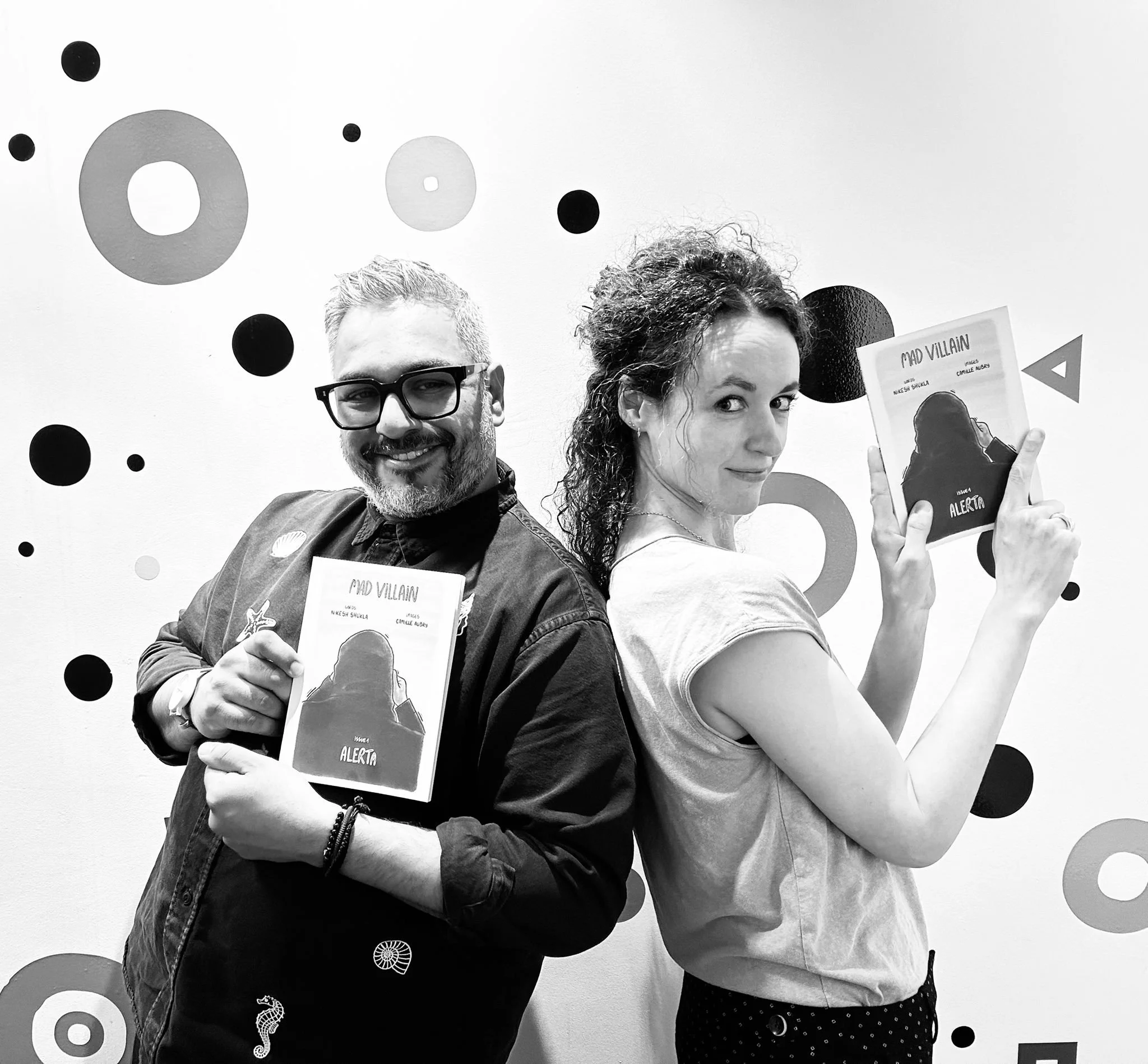
Actual humans who made a comic book
(The threat of) AI is the main subject of my industry’s focus at the moment. In the midst of major doubts and fears within our respective creative disciplines, Nikesh Shukla and I have decided to make a comic book. It is a comic book about antifascism, and on reflexion I believe that this political positioning is key when thinking about our relationship to AI.
Making a comic book is hard. Now I try and stay away from fear mongering publications from colleagues demonstrating how AI is scrapping away our work and rapidly replacing us (and thus feeding the demoniac beast). Think input: create a comic book on antifascism in Bristol, output:…? Well I am not going to try.
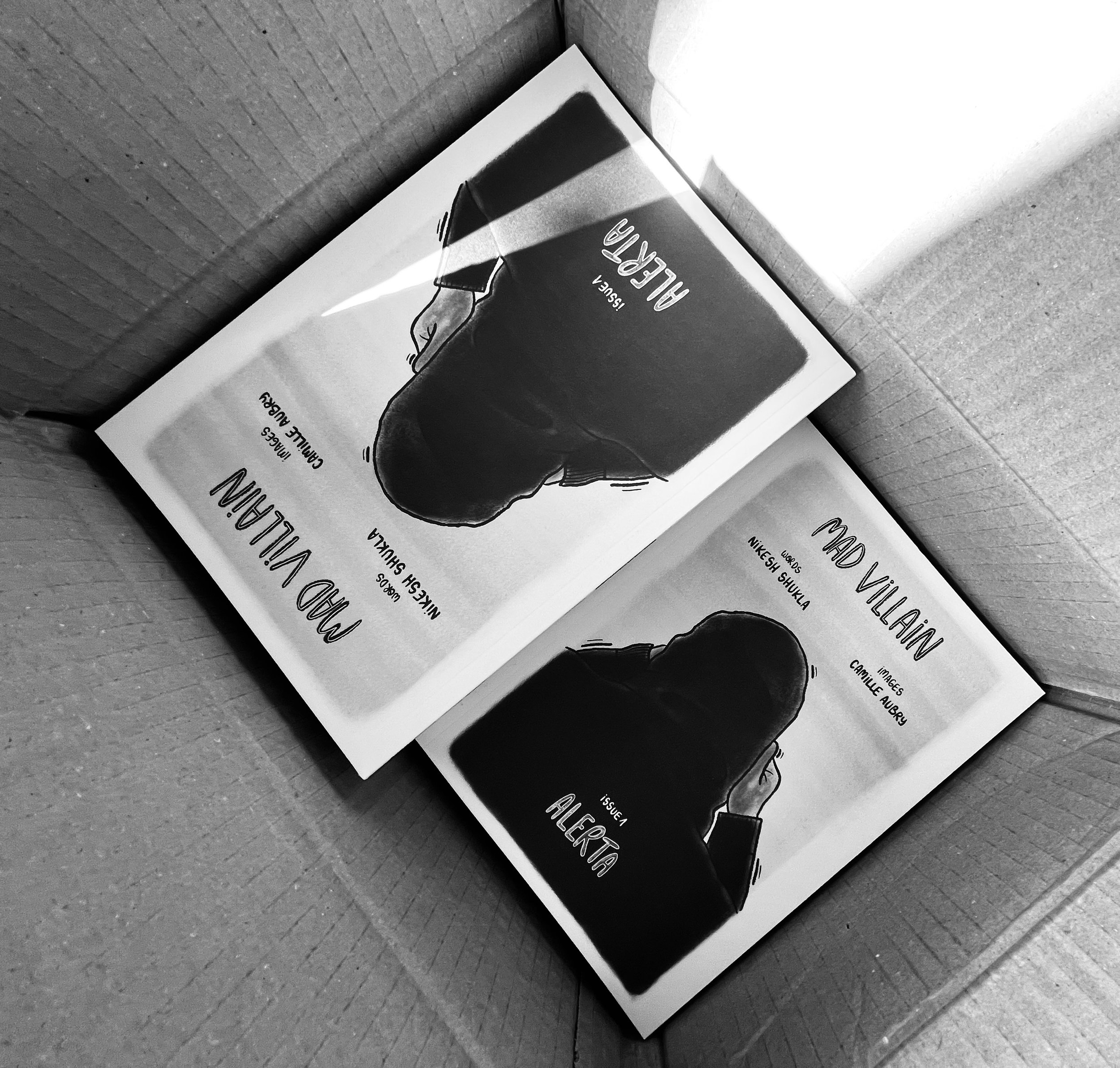
It smells nice
So I might be completely naive or missing the plot, but when I held the first issue of Mad Villain in my hands, I thought “here is something AI can’t do”. But it wasn’t just about the tangible, multi sensorial aspect of the comic book (although it does smell nice and feels very soft to the touch). Hear me out.
Generative AI for all its claims of replacing therapy is forgetting that one of the main purpose of human-made art is about its therapeutic process - the process of making it, and the process of experimenting it. Confusing process with content is probably the first main mistake of AI raison d’être. Writing and illustration aren’t content. Experiencing art isn’t consuming it. Our comic book can’t be the output-of-an-input without the reflective part behind it and we’re not expecting the act of reading it to be flat - it is a journey. Although Nikesh’s character brief notes could definitely be used as generative AI input (be my guest)…

We know search is changing, it now needs to answer a question in a way where we don’t have to think. But art, especially collaborative art, also demands curiosity. Our comic book is about testing a new reality and learning whether it works for us and the readers or not. And it’s ok if it doesn’t. We’re not promising a result, we just ask the reader to be available to discover something new and to trust us in this journey. We’re asking the readers to be consciously patient - this is the first chapter of a bigger instalment - but not passive. The magic of uncertainty, of trusting our unconscious, of accepting the mystery is the part that generative AI art will never match.
If you are curious about our human-made comic book, head this way.